
Cultural Practices: The Key to Success in the Healthy Turf Circle
The fourth element of the Healthy Turf Circle is cultural practices. Without proper cultural practices, even the best products—applied at the right times—may improve soil conditions but fail to produce visible results above the surface.
Meaningful improvements in soil health take time. To see year-over-year success and consistent improvement in turf quality, cultural practices must be dialed in. Mowing, watering, aeration, and over seeding form the foundation of successful turf management.
For more background, visit our previous posts on Soil Chemistry, Soil Biology, and Soil Structure.

Why Cultural Practices Matter in Turf Management
Cultural practices directly influence turf density, resilience, weed pressure, soil structure, and organic matter accumulation. When managed correctly, they amplify the benefits of soil-focused products and support long-term turf performance.
1. Mowing Guidelines: Building Density and Resilience
Proper mowing is the single most important cultural practice for maintaining healthy turf. It:
- Promotes consistent turf density and resilience
- Reduces weed competition by maintaining a strong turf canopy
- Contributes organic matter and helps to improve soil structure over time
Maintain Proper Mowing Height
Mow turf as high as practical for its intended use. A higher cut provides more leaf surface for photosynthesis, allowing plants to thrive while encouraging deeper, denser root growth that improves soil structure.
Only one-third of the turf plant should be removed at any mowing to minimize stress. Choose a mowing height that aligns with your ability to maintain consistent mowing frequency.
- Residential or passive-use lawns (mowed once per week):
Maintain a higher height of cut to avoid stress.
Example: A 3½″ mowing height typically requires mowing once turf reaches ~4.75–5.0″, which during peak growth often means mowing every 4–5 days. - Athletic fields (maintained at ~2″):
Turf must be mowed once it reaches ~2.6–2.7″, potentially requiring mowing up to three times per week which is often not possible for most establishments.
Use Sharp Blades
Dull mower blades tear grass rather than cut it cleanly, increasing susceptibility to disease and reducing visual quality. Blades should be sharpened or replaced after approximately every 24 hours of use.
Return Grass Clippings
Avoid bagging clippings unless weeds with flowers or seeds are present, or turf has grown excessively long. If turf becomes too long, double-cut and properly disperse clippings to avoid leaving clumps that will smother the grass.
Returning clippings:
- Adds valuable organic matter to the soil
- Reduces waste
- Supports soil health and structure
- The nutrients from the clippings is equivalent to 1 fertilizer application
Avoid mowing when turf is wet to minimize tearing and clumping.
2. Watering Lawns and Athletic Fields
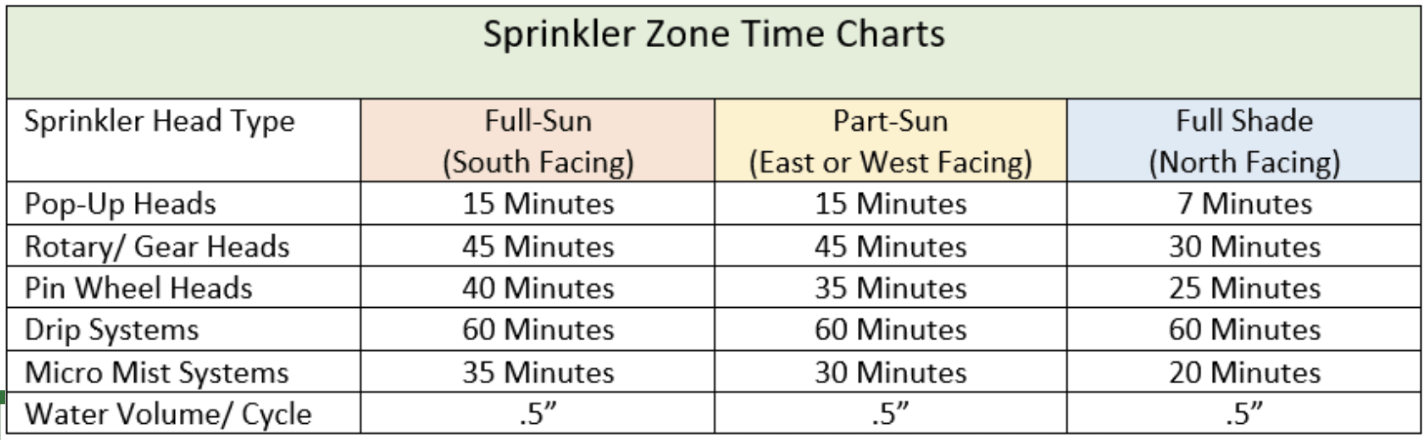
PJC follows the 1-2-3-2-1 Watering Method, designed to address modern drought conditions and watering restrictions common throughout the Northeast.
Best Watering Practices
- Aim for deep, infrequent watering
- Do not exceed 1.25″ of water per week
- 1″ per week is considered optimal under most conditions
Irrigation systems should be audited regularly throughout the season to ensure proper coverage and efficiency. The 1-2-3-2-1 chart provides general run-time estimates for various sprinkler head types.
Test Your Irrigation System with the Tuna Can Test
Place a 1″-deep container (such as a tuna can) in your irrigated area, run the system, and time how long it takes to fill. Divide that time by the number of watering cycles per week to determine proper run times.
Watering’s Impact on Soil Structure
More water is not always better.
- Frequent shallow watering leads to shallow roots, increased disease pressure, and higher weed competition
- Over watering can cause soils to become anaerobic, break down soil aggregates, leach nutrients, and reduce organic matter
- Deep, infrequent watering encourages roots to grow deeper, creating a more durable turf stand
In spring and fall, irrigation can often be reduced to once per week, allowing rainfall to supplement moisture needs. During summer droughts, watering up to three times per week may be necessary when permitted. Frequent watering should be reserved for overseeding windows to support germination.
3. Aeration: Relieving Compaction and Improving Soil Health
Aeration is a mechanical process that plays a critical role in improving soil structure by reducing compaction and delivering air, water, and nutrients into the rhizosphere.
Compacted soil restricts root growth because turf roots grow within soil pore spaces. Maintaining these spaces leads to stronger root systems and healthier turf.
Choosing the Right Aeration Method
- Core aeration is ideal during over seeding windows, increasing seed-to-soil contact
- Deep tine aeration is useful on athletic fields during summer when minimizing weed pressure is a concern
Home lawns typically require one fall aeration per year, while high-traffic athletic fields may need multiple aerations (4+) throughout the growing season.
Long-Term Benefits of Aeration
- Improved nutrient uptake
- Enhanced water retention and drainage
- Increased turf durability and performance year after year
4. Over seeding: Restoring Turf Density and Vigor
Turf plants weaken over time, and most managed turf areas are not allowed to reseed naturally. Introducing new turf plants improves density, vigor, and resilience.
Modern turf varieties are continually being developed to be more drought tolerant and require less fertilizer. Germination times range from 1–6 weeks, while full establishment can take 9–12 months, making timing and seed selection critical.
Best Timing for Overseeding
- Fall is the ideal over seeding window
- Fall seeding avoids summer heat stress and water restrictions
- Provides a longer establishment period before the following summer
Achieving Proper Seed-to-Soil Contact
- Spring over seeding: Use a slice or slit seeder to minimize soil disruption and weed pressure
- Fall over seeding: Core or plug aeration improves seed-to-soil contact while reducing compaction
While over seeding may seem costly, it is essential for establishing a dense turf stand that naturally suppresses weeds.
5. Weed Management: Addressing the Root Cause
Removing weeds alone will not cause turf to fill in magically. When weeds are present, the key question should be – “Why is this weed here?”
Weed pressure often points to underlying soil conditions or improper cultural practices.
- Plantain and dandelions thrive in compacted soils where calcium availability is limited
- Crabgrass proliferates under low mowing heights, drought stress, and poor soil conditions
- Grassy weeds like Poa annua prefer wet soils and are exacerbated by over watering
Raising mowing heights, managing irrigation, aerating compacted soils, balancing pH and improving soil fertility all reduce weed pressure naturally.
6. Turf Blankets: Gaining an Early-Season Advantage
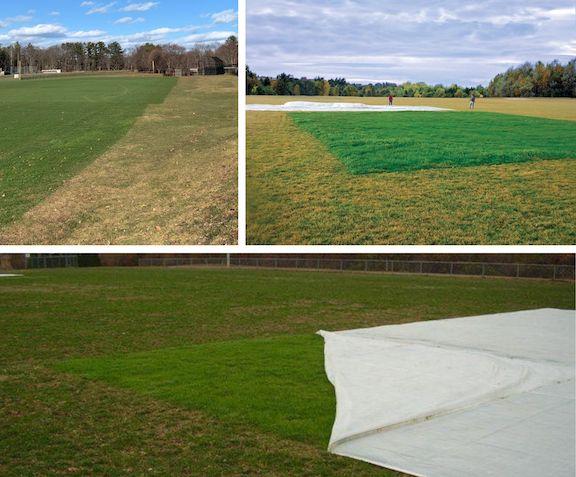
On athletic fields, turf blankets can accelerate early spring green-up by capturing heat while allowing air exchange. They are especially effective for early-season seeding when temperatures are unpredictable and faster germination is desired.
PJC’s Practical Approach to Cultural Practices
A clear pattern emerges: mowing higher, watering properly, and addressing soil fertility and pH consistently produce healthier turf with fewer weeds. These practices directly influence turf quality above ground while improving soil conditions below the surface.
The Healthy Turf Circle—Soil Chemistry, Soil Biology, Soil Structure, and Cultural Practices—was developed through years of research and field experience. Success in organic turf management depends on addressing all four components each year.
Proper cultural practices lay the groundwork for long-term success and ensure the full benefits of organic turf care programs are realized.