
Choosing the Right Spring Grass Seed Blend for Organic Turf Care
In organic turf care, we say grass seed is our weed control. A thick stand of turf is the best way to beat weeds. Unfortunately, our last two growing seasons have ended in a drought, impacting germination and establishment during the ideal overseeding window. This may necessitate more repair this spring.
Soil temperature, germination time frames, and pH all affect growing healthy grass, and these are the critical factors with spring seeding. The window to overseed typically caps by the end of May.
Whether dealing with residential lawns or athletic fields, the goal is to get coverage as quickly as possible in the spring. Quick coverage helps suppress weeds. Notably, in the spring, the overseeding window to establish grass can be very short, so choosing the right grass seed blend is important.
Spring seeding should not be focused on long-term establishment of high turf density. With current trends in summer weather, it should be anticipated that new seeding in the spring may not survive summer drought and heat without closely managed irrigation practices. Plan to overseed again in the fall.
Key Factors That Impact Spring Seeding Success
When planning spring seeding, focus on these key factors:
- Soil temperature
- Germination time frames
- Soil pH
- Moisture availability
- Timing, especially the shortened spring seeding window
Pros and Cons of Grass Seed Cultivars
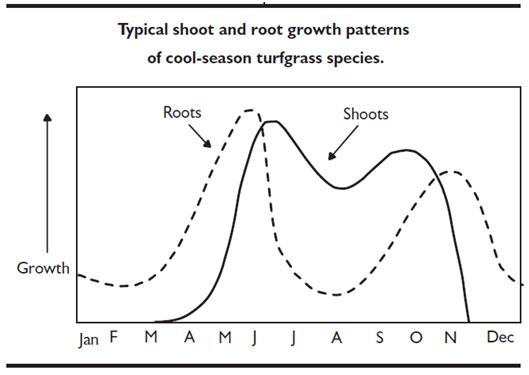
Cool-season grasses do best in the Northeast. Shoots begin developing in the temperature range of 60° to 75°F. Roots develop at temperatures of 50° to 65°F.
There is no single best cool-season grass variety. A blend of turf grass varieties will perform best depending on site conditions.
TriRye Perennial Ryegrass
TriRye Perennial Ryegrass is known for quick germination, typically 5 to 7 days with adequate moisture and temperature. It has good wear tolerance, average nutritional needs, and is a strong cultivar choice for repair.
It has fair heat tolerance but poor shade and drought tolerance, and it goes dormant in summer heat and drought.
Turf Type Tall Fescue
Turf Type Tall Fescue has average germination, typically 10 to 14 days, in warmer soil conditions (60° to 70°F). In some cases, this may not provide a long enough window in the spring to get established.
It has very good drought tolerance, good wear tolerance, good shade tolerance, and good heat tolerance. Turf type tall fescue requires lower nutritional inputs but does not compete well in established turf. Because of this, use a blend with a high percentage of TTTF and lower perennial rye or Kentucky blue when overseeding.
It can go dormant in the summer, but its outstanding heat tolerance keeps a tall canopy in irrigated lawns and helps performance all summer. This is the prime time to compete against undesired weed species.
Kentucky Bluegrass
Kentucky Bluegrass has slow germination, typically 21 to 28 days, which makes establishment in spring before summer heat very tricky.
It does have good wear tolerance and the highest nutritional needs. It is fair in heat tolerance, but poor in shade and drought tolerance. Kentucky bluegrass can be difficult to establish in spring.
Kentucky bluegrass performs best in early summer and fall, and it will avoid dormancy if it is well irrigated over the summer.
Fine Fescue
Fine Fescue has average germination, typically 10 to 14 days. It is excellent in shade, has low nutritional needs, and performs very well in drought. It has fair heat tolerance but low wear tolerance.
Fine fescue is not recommended for sunny areas.
PJC’s Top Spring Seed Performers
Athletic Field Recommendations
- 100% Tri Rye in April to May 15th
- Followed by 80% Perennial Ryegrass / 20% Kentucky Bluegrass in May
- Or 70/20/10 by June 15th
Residential Lawn Recommendations
- 100% Tri Rye for sunny areas
- 85% Fine Fescue / 10% Perennial Ryegrass / 5% Kentucky Bluegrass for shaded areas
Getting Good Seed-to-Soil Contact
Once you’ve chosen your seed, how you get seed-to-soil contact is just as important.
For small, thin, damaged areas, rough up the surface with an iron rake. Then mix the seed with a loam and compost mix, broadcast over the affected area, and rake it out.
For larger areas, we recommend slice seeding to achieve good soil-to-seed contact.
In residential applications where areas do not experience high compaction activities all season, you should avoid core aeration. The cores can bring weed seeds to the surface early in the season and disrupt the weed seed bank.
If you are unable to water, skip spring seeding and focus on fall.
Lastly, want more info on choosing the right spring grass seed, or interested in product pricing? Contact us!