
eforeIs Clover a Friend or a Foe?
Understanding Clover in Organic Lawn Care
As turfgrass comes out of dormancy in early spring, clover often gets a head start. This is because clover is a cool-season perennial, meaning it thrives in the same cool, wet conditions that slow down turfgrass growth. Beginning its germination and growth cycle at soil temps a full 10 degrees below cool season grasses.
So, is clover something to embrace, or something to control? The answer depends on your goals. Let’s break down the pros, cons, and best organic strategies for managing clover in your lawn.
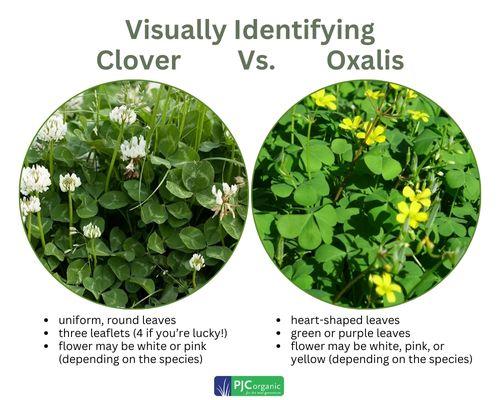
Clover vs. Oxalis: Know the Difference
Before diving in, it’s important to correctly identify clover. Many people confuse it with Oxalis, a different plant with similar leaf structure but different growth habits. Proper identification is key to choosing the right management approach.
Why Clover Shows Up in Lawns
Clover doesn’t just appear randomly; it’s often a signal of underlying soil conditions.
Common reasons include:
- Low soil fertility (especially nitrogen)
- Compacted soil
- Improper mowing practices
- Poor turf density
Clover thrives where grass struggles, particularly in cool, moist conditions.
The Benefits of Clover (The “Friend”)
While often labeled a weed, clover actually offers several ecological benefits:
- Natural nitrogen fixer – Clover obtains nitrogen from the atmosphere and ‘fix’ it in nodules on its roots. This Nitrogen fixing plant does indeed provide bio-available nitrogen to turf grass through its ability to convert atmospheric Nitrogen (N2) into Nitrates (NO3-) and Nitrites (NO2-) and Ammonium (NH4+). In turn, it enriches the soil and with the assistance of bacteria (Rhizobium) naturally fertilizes nearby plants.
- Improves soil health – especially in poor soils
- Supports pollinators like bees
- Stays green in drought conditions
- Can reduce fertilizer needs
- Out-competes other invasive weeds, therefore reducing the need for herbicides.
In organic systems, these traits can make clover a valuable ally rather than a problem. Historically, clover was included in grass seed blends and not until the 1950’s with the advent of broad leaf herbicides, like 2-4-D, was it thought of as a weed.
The Drawbacks of Clover (The “Foe”)
Despite its benefits, clover isn’t always desirable, especially in managed turf settings.
Potential downsides include:
- Creates a patchy lawn appearance
- Can outcompete turfgrass if conditions favor it
- Attracts bees, which may be a concern in high-traffic areas
- Signals imbalanced soil conditions
Ultimately, whether clover is a “weed” depends on expectations and site use.
How to Control Clover Naturally
In organic lawn care, the goal is long-term prevention through healthy turf.
1. Overseed
An aggressive over seeding program is key to thicken turf and crowd out clover. Aim to over-seed at least twice annually. In the spring, seed before May 15th. Seed between August 15th and September 15th in late summer or fall.
When over seeding in the spring, focus on grasses that germinate quickly, such as Perennial Rye Grass and Tall Fescue. These grasses, establish more rapidly in the cooler spring conditions and help create immediate ground coverage. in the fall, prioritize slower-germinating grasses—like Kentucky bluegrass—which benefit from the more extended establishment period and cooler, stable temperatures that encourage robust root development. selecting the right grass for the season ensures better results and improved turf density.
2. Adjust Soil Chemistry
Low soil pH – Our cool season turf grass varieties grow best in soils with pH 6.5-6.8. Low soil pH can lock up nitrogen, making it harder for the grass plant to access necessary nutrients and making it easier for clover to outcompete the grass. Perform a a soil test to determine pH and the appropriate lime requirements to increase soil pH.
3. Increase Fertility
Low fertility is a common driver of clover growth. A balanced fertility program, delivering approximately 2-3 pounds of nitrogen per 1,000 square feet each season, is a good starting point. If results fall short, consider adding a fourth application or switching to a higher-nitrogen organic fertilizer. 3-4 applications of PJC Organic ProHealthy Turf fertilizers will improve soil health and fertility for a more robust lawn.
4. Improve Organic Matter
Healthy levels of organic matter (OM) help buffer soil conditions and promote resilient turf. Increase OM by top-dressing, raising the height of cut during mowing, and maintaining deep, healthy roots that contribute to OM as they die off.
5. Address Soil Structure
PJC Organic ProHealthy Turf Charge-S3 and Boost+S3 both improve soil nutrient holding capacity. Charge-S3 does so by adding biochar and Boost+S3 add humates which improve soil organic matter and cation exchange capacity respectively.
6. Mow Higher
Maintain a higher mowing height throughout the growing season to:
- Reduce light reaching clover seeds
- Improve turf stress tolerance
- Enhance overall lawn appearance
7. Return Grass Clippings
Leaving clippings on the lawn adds organic matter, recycles nutrients, and improves soil structure over time.
8. Proper Watering
Lastly, avoid over watering. Water deep and infrequently to encourage turf grass competition. Clover prefers moist conditions and typically dies off in particularly dry areas. Allow soils to dry out completely before running irrigation again.
Organic Turf Care: The Big Picture
Clover control isn’t about reacting; it’s about building a system where turf thrives. By improving soil fertility, increasing organic matter, and following sound cultural practices, you can minimize clover naturally without relying on harsh chemicals.
Final Thoughts: Friend or Foe?
Clover isn’t inherently good or bad: it’s a signal. In low-input or ecological lawns, it can be beneficial. In high-performance turf, it may indicate underlying issues. Therefore, the key is understanding why it’s there and managing your lawn accordingly.
If you’re ready to take the next step in implementing an organic turf care program, PJC can help. From soil testing to customized recommendations and organic fertilizer solutions, we make the process simpler and more effective. Contact PJC today for support in creating healthy, weed-resistant lawns and athletic fields.
—————————————
Note: Despite best efforts, if a situation warrants a rescue treatment use a least toxic herbicide and consider Fiesta®selective broad leaf weed killer. Fiesta uses a specially formulated iron solution (active ingredient: Iron HEDTA (FeHEDTA) 26.52%), that Does Not contain the synthetic weed chemicals 2,4-D or Dicamba. Fiesta iron-based weed killer is registered with the EPA and requires a pesticide license to apply. Contact PJC for pricing.