Early Summer Turf Care Tips for Strong, Resilient Turf (Part 1)
Early summer is a transition period. Spring growth begins to slow while heat and drought stress increase. The way you manage turf now will shape how it performs later in the season.
1. Mowing: “Mow High – May, June and July”
We prepped you on this topic in our previous blog, but it’s time to put it into practice. Mowing turf grass short, especially when irrigation is not available, puts a lot of stress on turf plants. Unpredictable summer weather is best combated with happy turf plants that are tall and lush – giving them the best ability to grow throughout the summer.
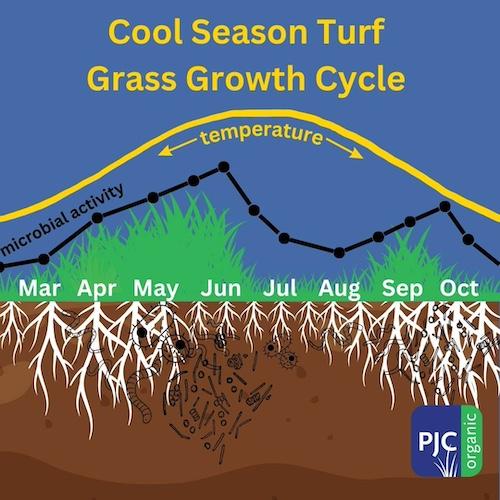
Naturally, growth slows during heat and drought. Meaning, mowing frequency often naturally decreases consistency still matters. The goal should be to focus on minimal turf blade removal and avoiding large swings in canopy height to reduce stress. If possible, avoid hot midday mowing to avoid excess moisture loss and tissue injury. Additionally, make sure to sharpen your blades as dull blades shred instead of cut, increase water loss create brown tips and in crease disease risk. Set your mower decks to 3-4″ for best results.
Note: if turf is severely drought stressed, avoid forcing mowing simply for appearance.
2. Irrigation: Water Deep and Infrequent
For irrigation we recommend the 1-2-3-2-1 Watering Method approach for the season. This helps you dial in irrigation schedules for optimized deep root watering throughout the season. Building resilient turf takes a combination of proper fertility and cultural practices.
Watering is important during summer, and doing it 2-3x per week is your best chance for success. Focus on applying enough water for deep penetration and slight drying between irrigation events. For established turf focus on providing 1-1.5″ of water a week between natural rainfall and supplemental irrigation.
3. Early Summer Aeration and Overseed

While spring aerations can be debated—due to bringing undesired weed seeds to the surface—there can be a lot of value in an early summer aeration and overseed. Many summer weeds present themselves due to compaction. Accordingly, aeration is our best approach to relieving soil compaction mechanically and presents the best opportunity to over seed.
If you have an irrigated turf, you can start establishing a durable seed variety like turf type tall fescue, to keep your lawn green and competing against weeds all summer. PJC does not recommend over seeding in the early summer on non-irrigated lawns, as summer drought can kill off newly establishing turf seeds, or if it will only be performed 1x a season. If aeration and over seeding is only going to be done once the fall is the best window.
4. Fertilize Your Turf
Summer stress is inevitable and the best nutrient to battle stress is potassium of the (K) on fertilizer product labels. Similar to fall fertilizer applications (preparing for winter), potassium is the nutrient responsible for the overall health of the turf plant – especially giving it the ability to withstand drought. Potassium improves turf vigor, giving plant cells the capacity to fight drought stress by retaining water and improving water carrying capacity. Additionally, potassium is critical to root structure, plant cell wall structure and disease resistance – all of which can be under stress during summer months. Be sure to use PJC ProHealthy Turf 6-0-6 or 8-0-6 for early summer apps to provide readily available potassium for your lawn or athletic field.
5. Follow PJC’s Organic Turf Care Program
If you’re feeling overwhelmed, follow PJC’s Organic Turf Care Programs designed for Landscapers and Schools & Municipalities. We have program offerings from 20+ years of tried-and-true practical experience. In addition, take a look at our Organic Turf Care Calendar at the bottom of our Resources Page. We break down monthly products and practices to take the guesswork out of organic turf care. Set your programs up for success and reach out if you want PJC’s guidance doing so.
Lastly, stay tuned for our next blog on additional tips 🙂