
Spring Lawn Mowing Tips: How to Mow for Strong, Healthy Turf
Spring mowing sets the tone for your lawn’s performance all season. Done right, it encourages deeper roots, better density, and natural weed suppression. Done poorly, it can stress turf just as it begins active growth.
Here are practical ways to mow in spring that support long-term lawn health.
Proper Mowing Height
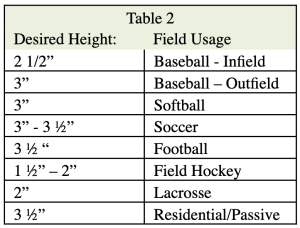
Begin with a higher mowing height to clean up winter debris and encourage upright growth. After clean up, for cool-season grasses, start at around 2.5 inches for the first few cuts, then gradually raise the height to 3–3.5 inches by mid-May. During summer heat, raise it further to 4 inches to protect the turf.
Pro Tip: Residential lawns typically thrive at 3–3.5 inches. Adjust based on site conditions, usage, and grass type.
Start with Sharp Blades
Clean cuts matter. Dull mower blades tear grass instead of cutting it, leaving jagged edges that lose moisture and invite disease. Sharpen blades before your first mow and check them regularly through the season. A good rule of thumb is to sharpen blades after every 24 hours of mowing and have a second set ready to go.
Follow the One-Third Rule
Never remove more than one-third of the grass blade at a time. Cutting too much at once shocks the plant and reduces its ability to photosynthesize. If the lawn has grown too tall, bring it down gradually over several mowings.

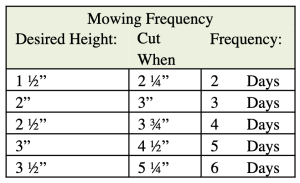
Don’t rely solely on your mower’s height setting—check the actual cut height manually, considering factors like tire pressure and mower weight.
Mow When the Lawn is Dry
Avoid mowing wet grass. Wet blades can clump, clog your mower, and result in an uneven cut. Waiting for dry conditions results in a cleaner, more consistent mow.
Adjust Mowing Schedule Throughout the Season
Grass grows fastest in spring and fall, so your mowing schedule should match its growth rate. Mow at least once per week during peak periods, adjusting as needed for slower growth. Athletic fields will require mowing at least twice a week based on desired height of cut.
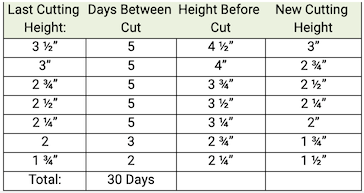
Regular mowing maintains ideal turf density and helps you stay within the one-third rule.
Leave Clippings
Grass clippings return valuable organic matter and nutrients to the soil. This natural recycling supports soil biology and reduces the need for additional fertility inputs. If grass has gotten too long double cut to spread clippings evenly to avoid buildup. Long clipping left on the lawn will kill the underlying grass.
Change Your Mowing Pattern
Avoid mowing in the same direction every time. Alternating patterns prevents soil compaction and reduces turf wear, especially in high-traffic areas. Try rotating your pattern weekly: north-south one week, east-west the next, then diagonally. Pattern variation encourages upright growth and an even lawn appearance.
A Practical Approach to Mowing with Proven Organic Products
At PJC, we believe healthy lawns start with smart practices and quality inputs. Proper mowing is just one part of a well-rounded turf care strategy. Combine these techniques with our all-natural, organic fertilizers and soil amendments for optimal results.
Remember, one-size-fits-all doesn’t exist for how to mow grass in spring. Tailor your mowing approach to your grass type, soil conditions, and seasonal changes for long-term success.
Ready to Take Your Lawn Care to the Next Level?
Don’t just stop with mowing—partner with PJC for a comprehensive organic turf care plan. Our team can help you customize your organic turf care program and choose the right products for your customers’ unique needs.
Contact us today to learn more about our practical approach and proven products—or browse our blog for more organic lawn care tips and advice.
978-432-1019 | info@pjcorganic.com
Want this info in one place? Download our Spring Mowing Guide.
Don’t just take it from PJC, See what the universities are saying about mowing protocol:
Michigan State University MSU Extension, Mowing Lawn Turf
UMass Extension Turf Program, Lawn Mowing
Cornell College of Agriculture and Life Sciences, Sports Field Management Mowing