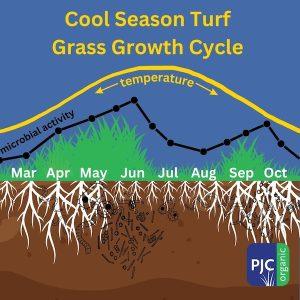
As temperatures rise, it becomes more important to mow high. Spring is in full swing, and presenting unique challenges this year. Persistent and worsening drought conditions continue for much of the Northeast, as well as early high heat windows. Nevertheless, turf grass is still starting to grow rapidly.
At PJC Organic, we live by the phrase: “Mow High – May, June, and July.” To clarify, it’s not just a catchy slogan — it’s a foundational cultural practice for organic turf care success. As such, keeping grass taller during late spring and summer helps lawns stay healthier under stress.
Why it Matters to Mow High
1. Develops Deeper Root Systems
Notably, there is a direct relationship between the height of turf grass and the depth of its root system. Therefore, lawns maintained at 3 inches or higher develop more robust roots than those cut at 1.5 inches. Stronger roots make your lawn:
- More drought-tolerant because of their ability to reach and retain water.
- More resistant to grub damage — Thick roots reduce grub damage naturally. According to a study by the Michigan State University Extension: “Raising the mowing height results in a large increase in root mass… A larger root system lessens the chance of damage by grubs that feed on these roots.”
- Increases Organic Matter as roots naturally die and regenerate the deposit organic carbon back in the soil, one of the primary ways to build organic matter. Impacting how soil stores watter, supports roots and buffers environmental stress.
2. Weed Suppression:
A higher mowing height shades the soil surface. This reduces the amount of sunlight that reaches weed seeds, limiting germination and growth.
3. Cooler Soil Temperatures
Longer leaf blades buffer heat stress trapping humidity near the soil surface. As a result, soil retains moisture and reduces stress.
4. Improved Photosynthesis
More blade surface means more energy production. Consequently, the plant can grow deeper roots and recover from stress better.
5. Better Moisture Retention
Longer grass helps the soil retain moisture by reducing evaporation. Undoubtably, this is critical during hot, dry periods.
6. Less Frequent Mowing
 When following the 1/3 rule, taller grass requires fewer cuts. Therefore, you align more regularly with a mowing frequency of 1x a week and reduce stress on the plant from removing too much lead blade in a single mowing.
7. Overall Lawn Resilience
Importantly, healthier turf means fewer issues and less chemical intervention.
Recommended Approach
In summary, gradually raise mowing height as the season progresses. Avoid sudden changes, which can stress the lawn. Furthermore, consistency is key.
Remember, mow high for a simple adjustment with a BIG impact. It strengthens turf naturally and reduces the need for additional inputs.
Need Help Building an Organic Program?
Lastly, PJC Organic supports landscapers and property managers with:
- Custom soil testing
- Organic lawn care products
- Organic Turf Care program development
- Expert guidance and education
Moreover, reach out! We’re here to help.