Why Soil Testing is the Foundation of Organic Turf Care
“If we all went away, trees and woody shrubs would eventually take over… Lawns don’t occur naturally in our climate. But we’re not going away. We don’t live in a natural environment, and lawns are an important part of the environment we’ve created.” — Mary Owen, UMASS Extension Turf Specialist Emeritus
Grass is Not Native to New England
In the mid-1800s, 60 to 80% of the land in the Northeast was cleared for pasture, orchards, lumber for buildings, and fuel. This is really important to remember: grass is not native to New England, so we need to work at changing soil conditions to favor growing turf grass—otherwise, the woods will return.
Start Every Turf Care Program with Soil Testing
Starting your turf care program with soil testing is essential to understand where you’re starting from and what strategies are needed to implement change so your soil is conducive to growing grass.
Soil testing provides critical insights into the chemical and physical characteristics of the soil. The soil test results give you information that allows you to tailor product recommendations to improve soil health and support turf grass.
Gathering firm baseline data is also important in setting client expectations.
PJC’s Practical Approach to Organic Soil Testing
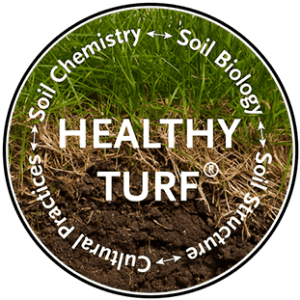 Our January blogs highlight PJC’s Healthy Turf Circle, emphasizing the importance of soil health for growing healthy turf. A soil test offers a snapshot of what’s happening beneath the surface and is key to developing a successful All-Natural Organic Turf Care Program.
At PJC Organic, we take a big-picture approach and recommend testing for…
Key Soil Health Indicators to Test:
- pH: Measures soil acidity or alkalinity. Key factor in bio availability of nutrients. Ideal pH is 6.5-6.7 with 6.2-6.9 acceptable ranges.
- Buffer pH: determines application rate & frequency.
- Organic Matter: Essential for nutrient and water retention.
- Cation Exchange Capacity (CEC): The soil’s ability to hold and exchange nutrients.
- Base Saturation (Ca:Mg): Balancing key nutrients like calcium, magnesium, and potassium. Ca:Mg determines type of lime to use and gypsum needs.
Due to the impact of glacial movement in creating our soils, as well as variations in prior land use between agriculture and forestation, there can be significant swings between customer properties. That’s why we recommend testing each property every 2–3 years.
PJC’s Proven Products and Soil Testing Support Services
So…you dutifully take a soil sample, send it off to a lab, and get the results back—then what?
If it’s not Greek to you, it may be to your clients.
Soil testing is PJC’s most popular support service. Based on your soil test results, we provide proven product recommendations to address soil conditions quickly and effectively.

PJC prides itself on comprehensive, easy-to-understand soil testing reports. These reports provide landscapers with an objective launching point for organic turf care customers.
Soil Testing Builds Confidence in Organic Lawn Programs
Soil testing provides landscapers and clients with the knowledge and confidence to commit to an organic program. It ensures that every product application and cultural practice is based on data, maximizing the program’s success.
Contact PJC Organic to Get Started
Contact us today to give your organic program the best chance for success!